Discover Our Group:

COUNTRIES

Professional Diagnostics

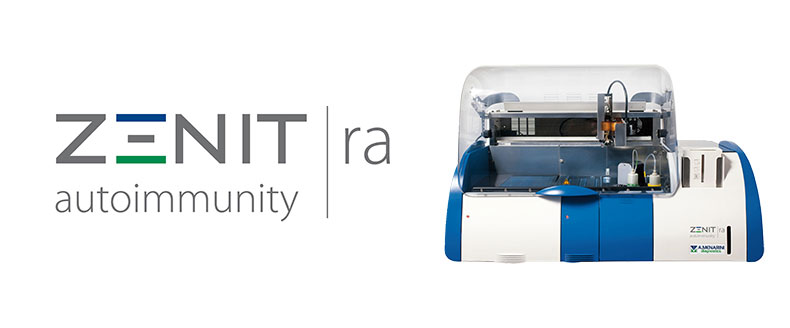
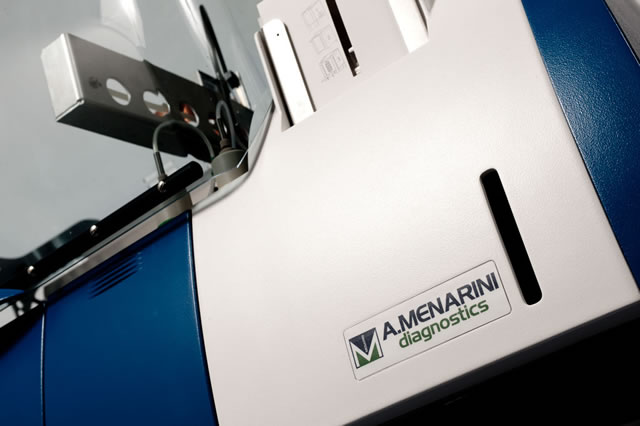
Zenit RA

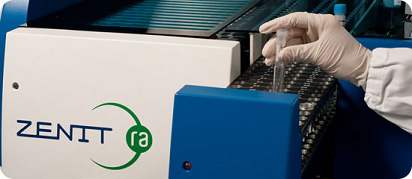
The fully automated immunoassay analyzer that best fits your needs in autoimmunity

Zenit RA easily detects the most common autoantibodies in autoimmune diseases, providing clinically useful data in a short time. The flexibility of its work modalities makes it particularly well adapted to determining antigenic specificities in daily practice.

Zenit RA is the exclusive new addition to A. Menarini Diagnostics Zenit series. It is magnetic microparticle-based and uses chemiluminescent detection (acridinium) to provide the high degree of precision and rapidity of analysis that your autoimmunity laboratory routine demands:

  • Accurate, standardized and reproducible results
  • First result within 25 minutes
  • Throughput: 70 results/hour

Zenit RA provides maximum flexibility and operational readiness in autoimmunity testing:

  • Up to 15 different simultaneous immunoassays
  • True walk-away operation
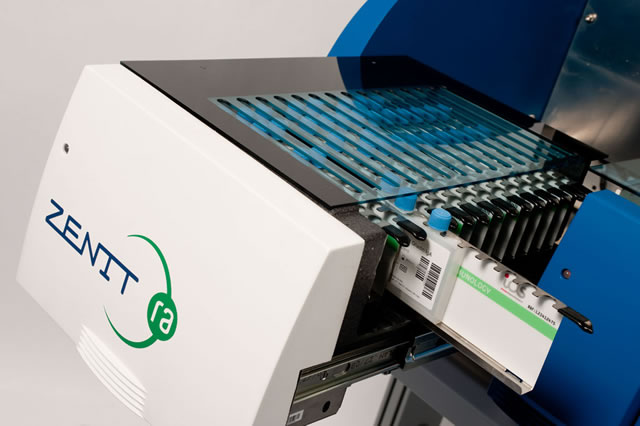
  • Continuous access to samples, reagents, consumables and parts
  • STAT priority function for urgent samples
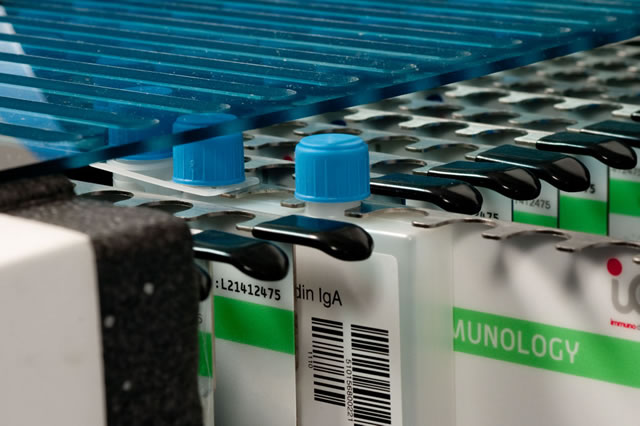
  • Continuous loading of bar-coded samples and reagents

It brings a higher degree of versatility to autoimmune diagnostics:

  • Consolidated 25-test autoimmunity menu
  • Calibration stable for 3 weeks for all reagents
  • Capacity and automation for medium to large laboratories
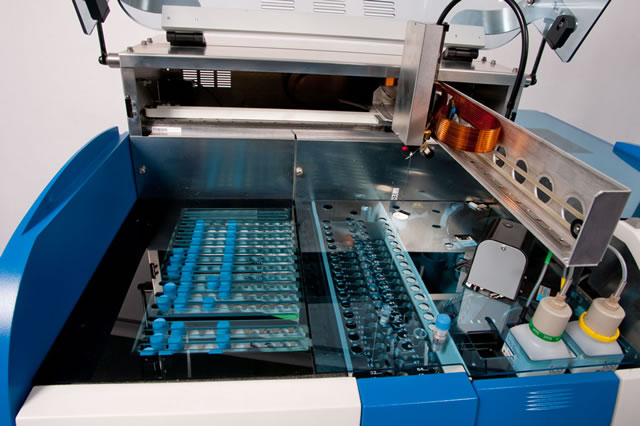
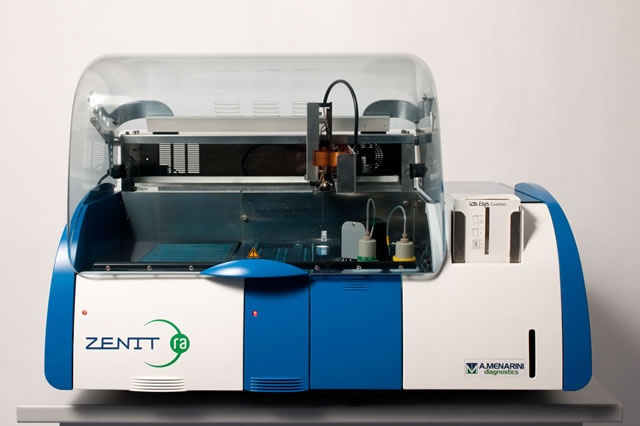
A fully automated system

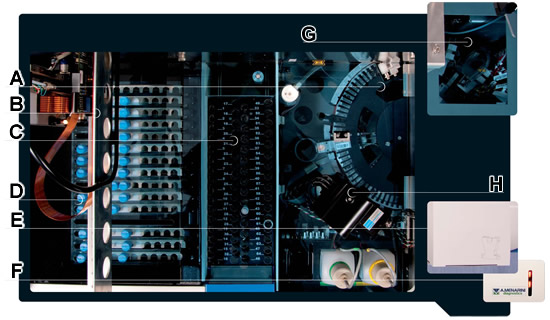
A.

A thermo-regulated carousel set at 37°C with 90 positions for disposable cuvettes.
A spectrophotometer for measuring absorbance in certain immunoassay reactions is incorporated into the carousel

B.

A pipetting arm that pipettes both reagents and samples

C.

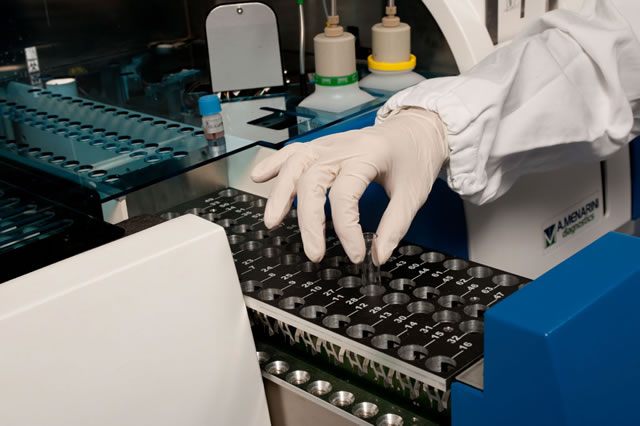
A sample tray with 64 positions for samples, calibrators and controls

D.

A refrigerated reagent compartment, consisting of 15 rails containing the immunoassay reagent racks. The reagent cartridges are stored in the refrigerated reagent compartment between 12 and 15°C while the analyzer is operating, and between 8 and 10°C in standby mode

E.

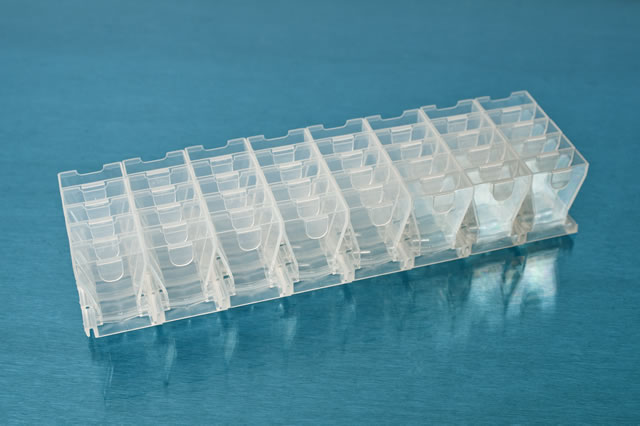
An automatic cuvette loader, holding 960cuvettes at a time (pre-formed as a cube)

F.

Two barcode readers (one located on the front face of the analyzer, the other integrated into the reagent compartment) identify samples, ancillary reagents and reagent cartridges

G.

Four washers for washing magnetic particles

H.

A luminometer measuring luminescence in immunoassay
reactions (directly in the cuvette)

Connective Tissue diseases

Code: 41411
Parameter/assay principle: Quantitative detection of IgG antibodies to dsDNA, centromere B, SS-A/Ro (60 kDa and 52 kDa), SS-B/La, Sm, U1-snRNP (70 kDa, A and C), Scl-70 and Jo-1
Number of tests: 100
Sample type: Serum or plasma (EDTA, Heparin)
Sample volume: 6 µl
Incubation time: 10 + 10 minutes
Stability of calibration: 3 weeks
Cartridge stability on board: 8 weeks
Measuring range: -
Results (Index): Negative <1.0 | Positive =1.0
Clinical specificity: -
Clinical sensitivity: -
Limit of detection: -
Precision: Intra-assay CV% =4.8 | Inter-assay CV% =8.6
Relative specificity§ **: 96.0%
Relative sensitivity§ **: 96.0%

*The content of this file is for informational purposes only. The latest, updated version of the IFU, to which you should always refer, is the one accompanying the product and is to be found on the disk inside the product kit.

** versus a commercial ELISA method
Code: 41412
Parameter/assay principle: Quantitative detection of IgG antibodies to SS-A/Ro (60 kDa and 52 kDa), SS-B/La, Sm, U1-snRNP (70 kDa, A and C), Scl-70 and Jo-1
Number of tests: 100
Sample type: Serum or plasma (EDTA, Heparin)
Sample volume: 6 µl
Incubation time: 10 + 10 minutes
Stability of calibration: 3 weeks
Cartridge stability on board: 8 weeks
Measuring range: -
Results (Index): Negative <1.0 | Positive =1.0
Clinical specificity: -
Clinical sensitivity: -
Limit of detection: -
Precision: Intra-assay CV% =4.3 | Inter-assay CV% =8.2
Relative specificity§: 94.4%
Relative sensitivity§: 98.3%

*The content of this file is for informational purposes only. The latest, updated version of the IFU, to which you should always refer, is the one accompanying the product and is to be found on the disk inside the product kit.

Code: 41413
Parameter/assay principle: Quantitative detection of IgG antibodies to dsDNA
Number of tests: 100
Sample type: Serum or plasma (EDTA, Heparin)
Sample volume: 4 µl
Incubation time: 10 + 10 minutes
Stability of calibration: 3 weeks
Cartridge stability on board: 8 weeks
Measuring range: 0-600 IU/mL
Results (IU/mL): Negative <30 | Doubtful 30-50 | Positive >50
Clinical specificity: -
Clinical sensitivity: -
Limit of detection: 24.2 IU/mL
Precision: Intra-assay CV% =4.1 | Inter-assay CV% =5.7
Relative specificity§: 98.2%
Relative sensitivity§: 89.3%

*The content of this file is for informational purposes only. The latest, updated version of the IFU, to which you should always refer, is the one accompanying the product and is to be found on the disk inside the product kit.

Code: 41414
Parameter/assay principle: Quantitative detection of IgG antibodies to SS-A/Ro
Number of tests: 50
Sample type: Serum or plasma (EDTA, Heparin)
Sample volume: 4 µl
Incubation time: 10 + 10 minutes
Stability of calibration: 3 weeks
Cartridge stability on board: 8 weeks
Measuring range: 0-640 AU/mL
Results (AU/mL): Negative <10 | Positive =10
Clinical specificity: -
Clinical sensitivity: -
Limit of detection: 4.5 AU/mL
Precision: Intra-assay CV% =3.2 | Inter-assay CV% =9.2
Relative specificity§: 98.3%
Relative sensitivity§: 100%

*The content of this file is for informational purposes only. The latest, updated version of the IFU, to which you should always refer, is the one accompanying the product and is to be found on the disk inside the product kit

Code: 41415
Parameter/assay principle: Quantitative detection of IgG antibodies to SS-B/La
Number of tests: 50
Sample type: Serum or plasma (EDTA, Heparin)
Sample volume: 4 µl
Incubation time: 10 + 10 minutes
Stability of calibration: 3 weeks
Cartridge stability on board: 8 weeks
Measuring range: 0-640 AU/mL
Results (AU/mL): Negative <10 | Positive =10
Clinical specificity: -
Clinical sensitivity: -
Limit of detection: 7.0 AU/mL
Precision: Intra-assay CV% =3.6 | Inter-assay CV% =9.1
Relative specificity§: 96.6%
Relative sensitivity§: 86.7%

*The content of this file is for informational purposes only. The latest, updated version of the IFU, to which you should always refer, is the one accompanying the product and is to be found on the disk inside the product kit.

Code 41416
Parameter/assay principle: Quantitative detection of IgG antibodies to Sm
Number of tests: 50
Sample type: Serum or plasma (EDTA, Heparin)
Sample volume: 4 µl
Incubation time: 10 + 10 minutes
Stability of calibration: 3 weeks
Cartridge stability on board: 8 weeks
Measuring range: 0-320 AU/mL
Results (AU/mL): Negative <10 | Positive =10
Clinical specificity: -
Clinical sensitivity: -
Limit of detection: 3.5 AU/mL
Precision: Intra-assay CV% =3.3 | Inter-assay CV% =8.5
Relative specificity§: 99.5%
Relative sensitivity§: 93.3%

*The content of this file is for informational purposes only. The latest, updated version of the IFU, to which you should always refer, is the one accompanying the product and is to be found on the disk inside the product kit

Code: 41417
Parameter/assay principle: Quantitative detection of IgG antibodies to U1-snRNP
Number of tests: 50
Sample type: Serum or plasma (EDTA, Heparin)
Sample volume: 4 µl
Incubation time: 10 + 10 minutes
Stability of calibration: 3 weeks
Cartridge stability on board: 8 weeks
Measuring range: 0-240 AU/mL
Results (AU/mL): Negative <10 | Positive =10
Clinical specificity: -
Clinical sensitivity: -
Limit of detection: 3.5 AU/mL
Precision: Intra-assay CV% =6.1 | Inter-assay CV% =9.9
Relative specificity§: 92.8%
Relative sensitivity§: 100%

*The content of this file is for informational purposes only. The latest, updated version of the IFU, to which you should always refer, is the one accompanying the product and is to be found on the disk inside the product kit.

Code: 41418
Parameter/assay principle: Quantitative detection of IgG antibodies to Scl-70
Number of tests: 50
Sample type: Serum or plasma (EDTA, Heparin)
Sample volume: 4 µl
Incubation time: 10 + 10 minutes
Stability of calibration: 3 weeks
Cartridge stability on board: 8 weeks
Measuring range: 0-640 AU/mL
Results (AU/mL): Negative <10 | Positive =10
Clinical specificity: -
Clinical sensitivity: -
Limit of detection: 5.0 AU/mL
Precision: Intra-assay CV% =9.5 | Inter-assay CV% =8.7
Relative specificity§: 99.5%
Relative sensitivity§: 100%

*The content of this file is for informational purposes only. The latest, updated version of the IFU, to which you should always refer, is the one accompanying the product and is to be found on the disk inside the product kit.

Code: 41419
Parameter/assay principle: Quantitative detection of IgG antibodies to Jo-1
Number of tests: 50
Sample type: Serum or plasma (EDTA, Heparin)
Sample volume: 4 µl
Incubation time: 10 + 10 minutes
Stability of calibration: 3 weeks
Cartridge stability on board: 8 weeks
Measuring range: 0-400 AU/mL
Results (AU/mL): Negative <10 | Positive =10
Clinical specificity: -
Clinical sensitivity: -
Limit of detection: 4.5 AU/mL
Precision: Intra-assay CV% =6.2 | Inter-assay CV% =5.1
Relative specificity§: 100%
Relative sensitivity§: 81.8%

*The content of this file is for informational purposes only. The latest, updated version of the IFU, to which you should always refer, is the one accompanying the product and is to be found on the disk inside the product kit

Code: 41431
Parameter/assay principle: Quantitative detection of IgG antibodies to centromere B
Number of tests: 50
Sample type: Serum or plasma (EDTA, Heparin)
Sample volume: 4 µl
Incubation time: 10 + 10 minutes
Stability of calibration: 3 weeks
Cartridge stability on board: 8 weeks
Measuring range: 0-640 AU/mL
Results (AU/mL): Negative <10 | Positive =10
Clinical specificity: -
Clinical sensitivity: -
Limit of detection: 7.2 AU/mL
Precision: Intra-assay CV% =9.8 | Inter-assay CV% =8.8
Relative specificity:§ 98.1%
Relative sensitivity:§ 97.9%

*The content of this file is for informational purposes only. The latest, updated version of the IFU, to which you should always refer, is the one accompanying the product and is to be found on the disk inside the product kit

Inflammatory Bowel diseases

Code: 41423
Parameter/assay principle: Quantitative detection of IgG antibodies to tissue transglutaminase
Number of tests: 50
Sample type: Serum or plasma (EDTA, Heparin)
Sample volume: 6 µL
Incubation time: 10 + 10 minutes
Stability of calibration: 3 weeks
Cartridge stability on board: 8 weeks
Measuring range : 0-200 AU/mL
Results (AU/mL): Negative <10 | Positive =10
Clinical specificity: 96.2%
Clinical sensitivity: 59.7%
Limit of detection: 8.3 AU/mL
Precision: Intra-assay CV% = 8.3 | Inter-assay CV% = 6.0
Relative specificity§: 90.1%
Relative sensitivity§: 78.8%

For optimal results the use of Zenit RA t-TG IgG Control set (cod. 41455) is recommended

Code: 41422

Parameter/assay principle: Quantitative detection of IgA antibodies to tissue transglutaminase | Estimation of total IgA concentrations (valuable in IgA anti-tTG negative samples)
Number of tests:100
Sample type: Serum or plasma (EDTA, Heparin)
Sample volume:4 µL
Incubation time:10 + 10 minutes
Stability of calibration: 3 weeks
Cartridge stability on board:8 weeks
Measuring range: 0-200 AU/mL
Results (AU/mL)* : Negative for IgA anti-tTG 0.8-9.9 | Possible IgA deficiency < 0.8 (<25 mg/dL) | Positive for IgA anti-tTG = 10
Clinical specificity: 96.7%
Clinical sensitivity: 98.4%
Limit of detection: 4.7 AU/mL**
Precision: Intra-assay CV% = 6.7 | Inter-assay CV% = 4.4
Relative specificity§: 89.2%
Relative sensitivity§: 98.0%

*for Zenit RA t-TG IgA kit data refer to total IgA levels; **refers to IgA anti-tTG; §versus a commercial ELISA method
For optimal results the use of Zenit RA Celiac Control set (cod. 41452) is recommended

Code: 41421
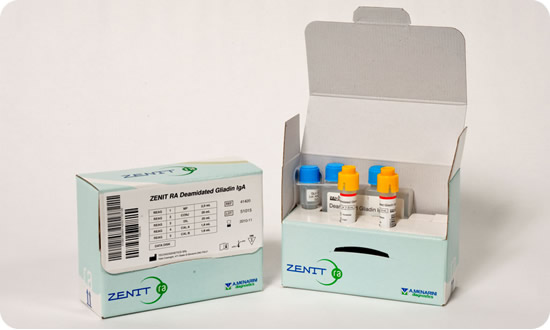
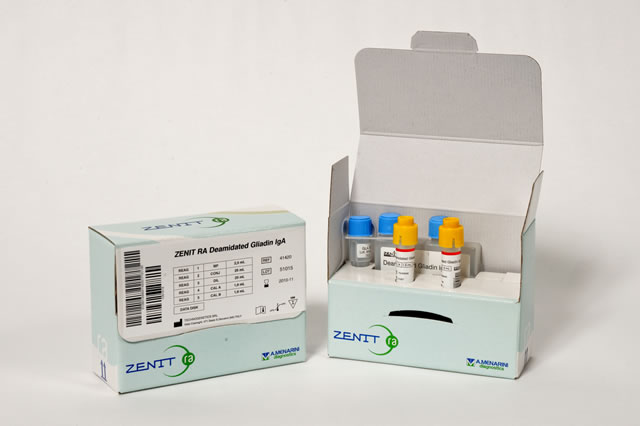
Parameter/assay principle: Quantitative detection of IgG antibodies to deamidated gliadin peptides
Number of tests: 100
Sample type: Serum or plasma (EDTA, Heparin)
Sample volume: 6 µL
Incubation time: 10 + 10 minutes
Stability of calibration: 3 weeks
Cartridge stability on board: 8 weeks
Measuring range: 0-200 AU/mL
Results (AU/mL)**: Negative < 10 | Positive = 10
Clinical specificity: 96.2%
Clinical sensitivity : 72.6%
Limit of detection: 6.0 AU/mL
Precision: Intra-assay CV% = 4.4 | Inter-assay CV% = 6.8
Relative specificity§: 92.0%
Relative sensitivity§ : 97.1%

*The content of this file is for informational purposes only. The latest, updated version of the IFU, to which you should always refer, is the one accompanying the product and is to be found on the disk inside the product kit

**for Zenit RA t-TG IgA kit data refer to total IgA levels; **refers to IgA anti-tTG; §versus a commercial ELISA method
For optimal results the use of Zenit RA Celiac Control set (cod. 41452) is recommended

Code: 41420
Parameter/assay principle: Quantitative detection of IgA antibodies to deamidated gliadin peptides
Number of tests: 100
Sample type: Serum or plasma (EDTA, Heparin)
Sample volume: 6 µL
Incubation time: 10 + 10 minutes
Stability of calibration: 3 weeks
Cartridge stability on board: 8 weeks
Measuring range : 0-200 AU/mL
Results (AU/mL)**: Negative <10 | Positive =10
Clinical specificity: 94.4%
Clinical sensitivity: 77.4%
Limit of detection: 5.2 AU/mL
Precision: Intra-assay CV% = 5.7 | Inter-assay CV% = 6.2
Relative specificity§: 97.2%
Relative sensitivity§: 92.9%

*The content of this file is for informational purposes only. The latest, updated version of the IFU, to which you should always refer, is the one accompanying the product and is to be found on the disk inside the product kit.

**for Zenit RA t-TG IgA kit data refer to total IgA levels
For optimal results the use of Zenit RA Celiac Control set (cod. 41452) is recommended

Anti-phospoholid syndrome

Code: 41424
Parameter/assay principle: Quantitative determination of the specific ß2-glycoprotein I dependent anti-cardiolipin IgG antibodies in samples of human serum or plasma
Number of tests: 100
Sample type: Serum or plasma (EDTA, Heparin)
Sample volume: 6 µL
Incubation time: 10 + 10 minutes
Stability of calibration: 3 weeks
Cartridge stability on board: 8 weeks
Measuring range: 0-640 GPL U/ml.
Results (AU/mL)**: Negative < 10 | Positive = 20
Clinical specificity: 93.7%
Clinical sensitivity : 84,4%
Limit of detection: 10.8 GPL U/ml
Precision: Intra-assay CV% = 6,2% | Inter-assay CV% = 11,0%
Relative specificity§: 98,2%
Relative sensitivity§ : 95,2%

*The content of this file is for informational purposes only. The latest, updated version of the IFU, to which you should always refer, is the one accompanying the product and is to be found on the disk inside the product kit

Code: 41425
Parameter/assay principle: Quantitative determination of the specific ß2-glycoprotein I dependent anti-cardiolipin IgM antibodies in samples of human serum or plasma
Number of tests: 100
Sample type: Serum or plasma (EDTA, Heparin)
Sample volume: 6 µL
Incubation time: 10 + 10 minutes
Stability of calibration: 3 weeks
Cartridge stability on board: 8 weeks
Measuring range: 0-640 MPL U/ml.
Results (AU/mL)**: Negative < 10 | Positive = 10
Clinical specificity: 97.5%
Clinical sensitivity : 39,7%
Limit of detection: 6.8 MPL U/ml
Precision: Intra-assay CV% = 6,7% | Inter-assay CV% = 9,3%
Relative specificity§: 95,4%
Relative sensitivity§ : 92,3%

*The content of this file is for informational purposes only. The latest, updated version of the IFU, to which you should always refer, is the one accompanying the product and is to be found on the disk inside the product kit

Code: 41426
Parameter/assay principle: Quantitative determination of the specific IgG antibodies directed againstß2-glycoprotein I in samples of human serum or plasma
Number of tests: 100
Sample type: Serum or plasma (EDTA, Heparin)
Sample volume: 6 µL
Incubation time: 10 + 10 minutes
Stability of calibration: 3 weeks
Cartridge stability on board: 8 weeks
Measuring range: 0.0 – 867 AU/ml.
Results (AU/mL)**: Negative < 10 | Positive = 20
Clinical specificity: 94,9%
Clinical sensitivity : 83,8%
Limit of detection: 8.1 AU/ml.
Precision: Intra-assay CV% = 5,3% | Inter-assay CV% = 10,5%
Relative specificity§: 93,0%
Relative sensitivity§ : 98,8%

*The content of this file is for informational purposes only. The latest, updated version of the IFU, to which you should always refer, is the one accompanying the product and is to be found on the disk inside the product kit

Code: 41427
Parameter/assay principle: Quantitative determination of the specific IgM antibodies directed againstß2-glycoprotein I in samples of human serum or plasma
Number of tests: 100
Sample type: Serum or plasma (EDTA, Heparin)
Sample volume: 6 µL
Incubation time: 10 + 10 minutes
Stability of calibration: 3 weeks
Cartridge stability on board: 8 weeks
Measuring range: is: 0.0 – 300 AU/ml.Results (AU/mL)**: Negative < 10 | Positive = 10
Clinical specificity: 96,0%
Clinical sensitivity : 32,4%
Limit of detection: 3,7 AU/ml.
Precision: Intra-assay CV% = 4,9% | Inter-assay CV% = 7,6%
Relative specificity§: 95,9%
Relative sensitivity§ : 95,5%

*The content of this file is for informational purposes only. The latest, updated version of the IFU, to which you should always refer, is the one accompanying the product and is to be found on the disk inside the product kit

Autoimmune Liver Diseases

Code: 46315
Parameter/assay principle: Quantitative detection of IgG against Liver Kidney Microsomes antigen type 1
Number of tests: 50
Sample type: Serum or plasma (EDTA, Heparin)
Sample volume: 10 µl
Incubation time: 10 + 10 minutes
Stability of calibration: 3 weeks
Cartridge stability on board: 8 weeks
Measuring range: 0.0 – 300 AU/mL.
Results (AU/mL): Negative < 15 Positive >= 15
Relative specificity**: 97,6 %
Relative sensitivity**: 100 %


*The content of this file is for informational purposes only.The latest, updated version of the IFU, to which you should always refer, is the one accompanying the product and is to be found on the disk inside the product kit

**versus a commercial ELISA method
Code: 46316
Parameter/assay principle: Quantitative detection of IgG antibodies to against Anti-Mitochondrial Antibodies
Number of tests: 50
Sample type: Serum or plasma (EDTA, Heparin)
Sample volume: 10 µl
Incubation time: 10 + 10 minutes
Stability of calibration: 3 weeks
Cartridge stability on board: 8 weeks
Measuring range: 0-1000 AU/mL
Results (AU/mL): Negative < 10 Positive >= 10
Relative specificity**: 97.4 %
Relative sensitivity**: 88.9 %


*The content of this file is for informational purposes only.The latest, updated version of the IFU, to which you should always refer, is the one accompanying the product and is to be found on the disk inside the product kit

**versus a commercial ELISA method
IRheumatoid Arthritis

Code: 41430
Parameter/assay principle: Quantitative detection of IgG antibodies to cyclic citrullinated peptide (CCP) 2nd Generation
Number of tests: 100
Sample type: Serum or plasma (EDTA, Heparin)
Sample volume: 4 µL
Incubation time: 10 + 10 minutes
Stability of calibration: 3 weeks
Cartridge stability on board: 8 weeks
Measuring range: 0-320 AU/mL
Results (AU/mL)**: Negative < 5 | Positive = 5
Clinical specificity: -
Clinical sensitivity: -
Limit of detection: 2.1 AU/mL
Precision: Intra-assay CV% = 4.8 | Inter-assay CV% = 5.6
Relative specificity*: 97.4%
Relative sensitivity*: 95.7%

*The content of this file is for informational purposes only. The latest, updated version of the IFU, to which you should always refer, is the one accompanying the product and is to be found on the disk inside the product kit

**versus a commercial ELISA method
For optimal results the use of Zenit RA CCP Control set (cod. 41451) is recommended

Vasculitis

Code: 41428
Parameter/assay principle: Quantitative detection of IgG antibodies to myeloperoxidase (MPO)
Number of tests: 50
Sample type: Serum or plasma (EDTA, Heparin)
Sample volume: 4 µL
Incubation time: 10 + 10 minutes
Stability of calibration: 3 weeks
Cartridge stability on board: 8 weeks
Measuring range: 0-860 AU/mL
Results (AU/mL): Negative < 10 | Positive >20 | Doubtful 10-20
Clinical specificity: 95.2%
Clinical sensitivity: 84.4%
Limit of detection: 3.8 AU/mL
Precision: Intra-assay CV% = 4.3 | Inter-assay CV% = 9.0
Relative specificity**: 95.2%
Relative sensitivity**: 93.2%

*The content of this file is for informational purposes only.The latest, updated version of the IFU, to which you should always refer, is the one accompanying the product and is to be found on the disk inside the product kit

**versus a commercial ELISA method
For optimal results the use of Zenit RA ANCA/GBM Control set (cod. 41449) is recommended

Code: 41429
Parameter/assay principle: Quantitative detection of IgG antibodies to proteinase 3 (PR3)
Number of tests: 50
Sample type: Serum or plasma (EDTA, Heparin)
Sample volume: 6 µL
Incubation time: 10 + 10 minutes
Stability of calibration: 3 weeks
Cartridge stability on board: 8 weeks
Measuring range: 0-1000 AU/mL
Results (AU/mL): Negative < 10 | Positive > 20 | Doubtful 10-20
Clinical specificity: 94.0%
Clinical sensitivity: 78.0%
Limit of detection: 7.3 AU/mL
Precision: Intra-assay CV% = 3.5 | Inter-assay CV% = 8.9
Relative specificity**: 98.3%
Relative sensitivity**: 97.8%

*The content of this file is for informational purposes only. The latest, updated version of the IFU, to which you should always refer, is the one accompanying the product and is to be found on the disk inside the product kit

**versus a commercial ELISA method
For optimal results the use of Zenit RA ANCA/GBM Control set (cod. 41449) is recommended

Code: 43735
Parameter/assay principle: Quantitative detection of IgG antibodies to Basal Glomerular Membrane (GBM)
Number of tests: 50
Sample type: Serum or plasma (EDTA, Heparin)
Sample volume: 4 µL
Incubation time: 10 + 10 minutes
Stability of calibration: 3 weeks
Cartridge stability on board: 8 weeks
Measuring range: 0-1000 AU/mL
Results (AU/mL): Negative < 40 | Positive >40 |

Precision: Intra-assay CV% = 4.3 | Inter-assay CV% = 9.0
Relative specificity**: 98.4%
Relative sensitivity**: 90.9%

*The content of this file is for informational purposes only.The latest, updated version of the IFU, to which you should always refer, is the one accompanying the product and is to be found on the disk inside the product kit

**versus a commercial ELISA method
For optimal results the use of Zenit RA ANCA/GBM Control set (cod. 41449) is recommended.

Autoimmune Thyroiditis


Code: 47745
Parameter/assay principle: Quantitative detection of of specific IgG class antibodies acting against human thyroglobulin,(TG)
Number of tests: 100
Sample type: Serum or plasma (EDTA, Heparin)
Sample volume: 10 µl
Incubation time: 10 + 10 minutes
Stability of calibration: 3 weeks
Cartridge stability on board: 8 weeks
Measuring range: 0.0 – 5500 IU/mL
Results (AU/mL):
< 50 The sample must be considered to be negative for the presence of anti-thyroglobulin antibodies
50 ÷ 75 The sample must be considered to be uncertain for the presence of anti-thyroglobulin antibodies
> 75 The sample must be considered to be positive for the presence of anti-thyroglobulin antibodies

Relative specificity**: 97,0 %
Relative sensitivity**: 94,1 %

*The content of this file is for informational purposes only.The latest, updated version of the IFU, to which you should always refer, is the one accompanying the product and is to be found on the disk inside the product kit

**versus a commercial method


Code: 47746
Parameter/assay principle: Quantitative detection of of specific IgG class antibodies acting against Thyroid peroxidase (TPO)
Number of tests: 100
Sample type: Serum or plasma (EDTA, Heparin)
Sample volume: 10 µl
Incubation time: 10 + 10 minutes
Stability of calibration: 3 weeks
Cartridge stability on board: 8 weeks
Measuring range: 0.0 – 1300 IU/mL
Results (AU/mL):
< 15 The sample must be considered to be negative for the presence of anti-TPO antibodies
15 ÷ 25 The sample must be considered to be uncertain for the presence of anti-TPO antibodies
> 25 The sample must be considered to be positive for the presence of anti-TPO antibodies

Relative specificity**: 97,2 %
Relative sensitivity**: 93,8 %

*The content of this file is for informational purposes only.The latest, updated version of the IFU, to which you should always refer, is the one accompanying the product and is to be found on the disk inside the product kit

**versus a commercial method

AN INNOVATIVE OPERATING PRINCIPLE
CLIA (Chemiluminescence enzyme immunoassay) based tecnology

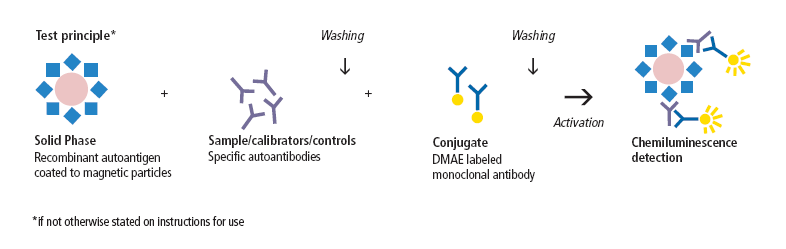
The assay is based on a two-step indirect chemiluminescent method that generates quantitative results. This particular technique uses autoantigen-coated magnetic particles as solid phase and an antibody labeled with a dimethyl acridinium ester (DMAE) as detection marker. The use of high quality antigens and large coated surfaces provides excellent sensitivity in Zenit RA immunoassays.

  1. In the first incubation phase, specific autoantibodies present either in the sample, calibrators or controls bind to the immobilized antigen
  2. In the second incubation phase the DMAE conjugate reacts with the coated magnetic particle-autoantibody complexes
  3. Non-bound material is washed away after every incubation step
  4. Chemiluminescence is activated by the addition of trigger solutions:
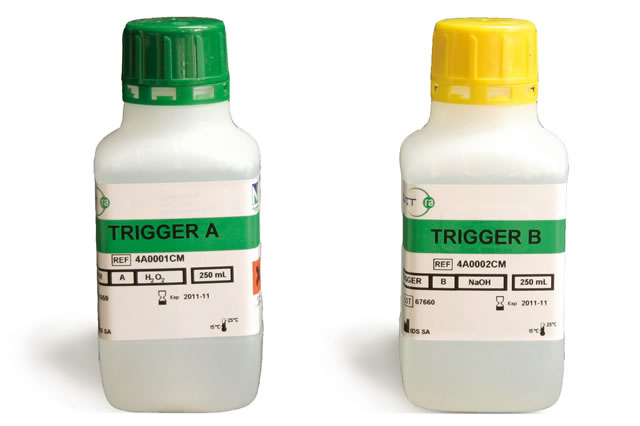
    A (hydrogen peroxide) and B (an alkaline solution), resulting in oxidation of the ester to an excited form. Return to a stable state is accompanied by the emission of light, which is measured and expressed in Relative Light Units (RLU)
  5. The signal is directly proportional to the concentration of specific autoantibodies in the samples, calibrators or controls

AN OPTIMIZED WORKFLOW Let’s push the start button…
  1. Samples and reagents are aspirated using a probe equipped to detect liquid level using capacitance. The sample and reagents are pipetted in accordance with the validated parameters for each assay and transferred into a cuvette where the reaction takes place
  2. Reaction cuvettes are then incubated on the carousel at 37°C for 10 minutes
  3. The probe is rinsed internally and externally between each sample to eliminate any risk of contamination
  4. The cuvettes are transferred to the washing module where magnets hold the solid phase (magnetic particles) during washing
  5. Conjugate is added to the cuvettes and they are transferred to the carousel for another incubation at 37°C for 10 minutes
  6. After this last incubation step, another washing is performed in the washing module as mentioned earlier
  7. The cuvette is then transferred to the luminometer where trigger reagents are added to produce luminescence
  8. When measurement is complete, cuvettes are automatically ejected into a re-usable solid waste tray

THE KEY FEATURES AT A GLANCE
Flexibility
  • Various work modalities: Random access, batch mode and STAT priority function for urgent samples
  • Up to 15 different simultaneous immunoassays
  • Continuous access to samples, reagents, consumables and parts
  • 64 positions for samples, controls or calibrators
  • Several disciplines can be processed in one run (Autoimmunity but also Infectiology)
  • Patient-specific test profiles
  • On-board dilution and pre-treatment of samples
  • Calibration stable for 3 weeks
  • Asynchronous management of samples
  • Reagent cartridges on board in a refrigerated area
  • Primary and secondary tubes accepted: 5, 7, 10 ml tubes and pediatric micro-cups
  • Reflex testing capability

Accuracy, Reproducibility...
  • Highly reliable results:
    • Stored master curve
    • 2-point recalibration method
    • Use of coated-microparticles instead of classical coated-cuvettes (providing more uniform and extensive coating)

…and quality/safety of the results
  • Flashing light drawer-system (to prevent interruption of procedures and safeguard results)
  • One cuvette per test (to avoid potential cross contamination)
  • Probe rinsing between each sample
  • Clot detection system

Efficiency
  • Short time to first result: within 25 minutes
  • High throughput: 70tests/hour
  • Continuous loading of bar-coded samples and reagents for peak workloads
  • Workload management for optimal throughput: ideal for labs performing 50 to 400tests per day
  • Sample volumes as low as 4 µl in some assays
  • Calibrators and controls included
  • Ready to use reagent cartridges

Simplicity
  • Load and walk away (960 cuvettes on board, automatic cuvette loader, ancillary reagents on board for more than 1000 tests)
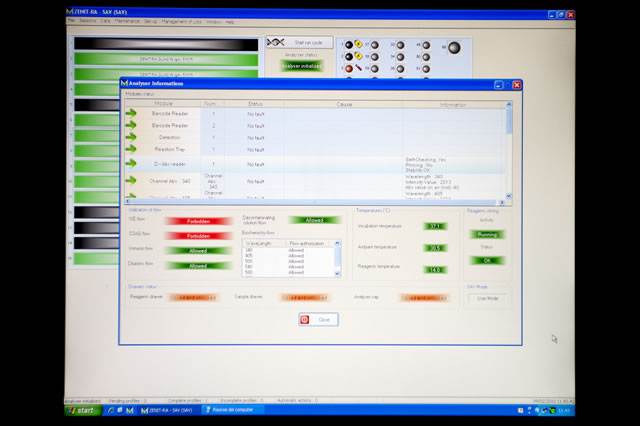
  • Intuitive user interface
  • Barcode reading for all reagents and samples

Computerized functionality

The analyzer is connected to a computer via an Ethernet link.
Workflow is programmed with dedicated software that performs the following functions:

  • Management of reagent, calibrator and control lots
  • Quality controls (Levey-Jennings and Westgard)
  • Management of ancillary reagents
  • Full traceability of samples, reagents and operators
  • Transfer of results to a centralized computer system
  • Automatic wakeup and shutdown
  • Remote maintenance connection

Lab-Friendly design
  • Small size (L 105 cm x H 70 cm x W 75 cm)
  • Benchtop
  • Flashing light drawer-system

Listing

ZENIT RA
Cuvette CubePack of 960 cuvettes

Cod. 41402


ZENIT RA System Liquid
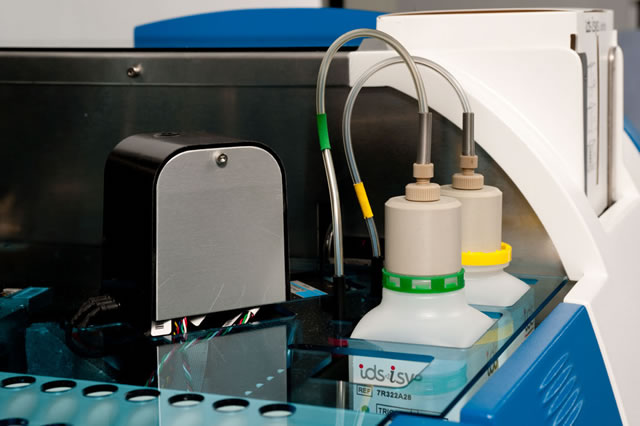
1 bottle of 0.5 L of 10X solution

Cod. 41409


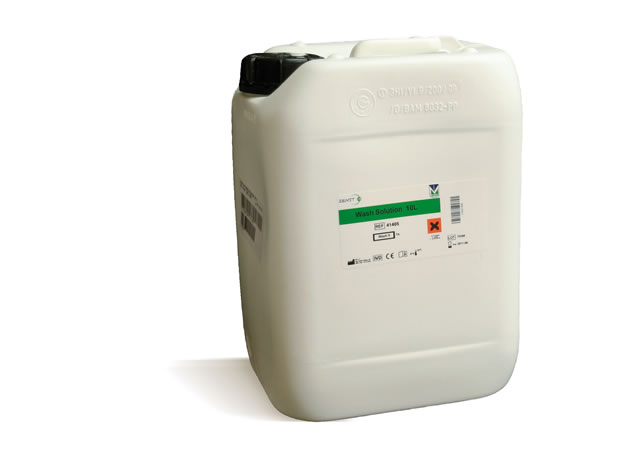
ZENIT RA Wash Solution
1 bottle of 0.5 L of 20X solution

Cod. 41407


ZENIT RA Trigger Set
1 flask of 250 mL of Trigger A (pre-activation solution)
1 flask of 250 mL of Trigger B (activation solution)

Cod. 41403


ZENIT RA D-SORB Solution
Pack of 2 bottles of 1 L ready to use solution

Cod. 41436


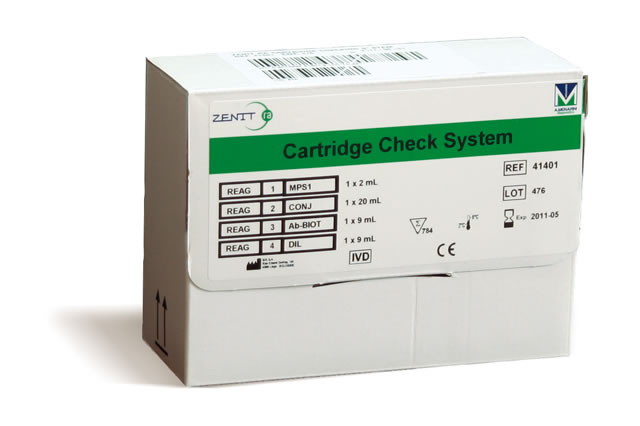
ZENIT RA
Cartridge Checking System

Cod. 41401


ZENIT RA Top Cap Set
300 caps for closing calibrators containers after first us

Cod. 41566


A CONSOLIDATED 22-TEST MENU IN AUTOIMMUNITY
…and soon in Serology

Currently available immunoassays are listed in the previouos page. Active collaborations between A. Menarini Diagnostics and clinicians and researchers world-wide provide a constantly expanding menu of highly specific next generation disease markers.

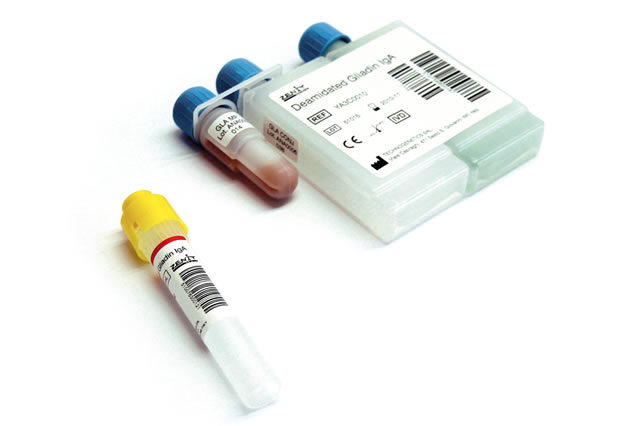
Kit characteristics and advantages

  • Clinically validated quantitative assays
  • Bar-coded, ready to use cartridges
  • Magnetic particle-based principle
  • On-board stability of reagent cartridge: 4-8 weeks
  • Analytical performances evaluated according to the CLSI guidelines
  • Calibration stable for 3 weeks*
  • Pack of 50-100 tests

*if not stated otherwise on instructions for use


Fabricante: Technogenetics s.r.l

Pictures of Zenit RA